SEO Services for Doctors and Clinics: Improve Patient Acquisition

Healthcare has always grown on trust, but patient acquisition no longer happens only through referrals, hospital networks, or a well-placed sign outside the practice. Search has become one of the first checkpoints in the patient journey. A parent looking for a pediatrician nearby, an adult comparing dermatologists, or a caregiver searching for a diabetes clinic often starts with a phone and a very practical query. They want answers, proximity, reassurance, and a clear next step.
That shift has changed the role of digital marketing for medical practices. Generic visibility is not enough. Doctors and clinics need to appear in the right searches, present accurate information, communicate credibility, and SEO Services reduce friction between discovery and appointment booking. This is where SEO Services become materially useful. Done well, they help a practice attract patients who are already looking for care. Done poorly, they generate traffic that never converts or, worse, misrepresent the practice altogether.
Medical SEO requires more restraint and judgment than many industries. You cannot promise outcomes. You cannot be casual with health claims. You cannot treat every page like a lead generation funnel and expect patients to trust what they find. The clinics that perform best in search usually share a few traits. Their websites are technically sound, their local profiles are maintained, their service pages reflect how patients actually search, and their content respects both clinical accuracy and human anxiety.
Why search matters differently in healthcare
A search for a restaurant and a search for a cardiologist are not equivalent. The emotional temperature is different. The stakes are higher. Patients may be in pain, embarrassed, confused, or pressed for time. Someone searching “same day ENT appointment near me” is not browsing. Someone looking up “is chest tightness anxiety or heart problem” may be early in the decision cycle, but their need is still urgent in a personal sense.
That difference affects how SEO should be approached. In retail, a site can sometimes win with aggressive landing pages and heavy promotional tactics. In healthcare, those same tactics often backfire. Patients scan for signs of legitimacy very quickly. They look for physician credentials, accepted insurance, clinic location, parking, appointment availability, hospital affiliations, treatment philosophy, and whether the language on the page sounds responsible rather than inflated.
I have seen practices spend heavily on paid ads while neglecting the basics that drive trust in organic search. A clinic may rank for a handful of terms, but if the Google Business Profile lists old hours, the website buries the phone number, and the doctor bio reads like a stripped-down resume, patient acquisition stalls. Search visibility gets them seen. Trust signals get them chosen.
What patients actually search for
Many clinic owners assume patients search only for branded terms or broad specialty phrases such as “orthopedic clinic” or “dentist near me.” In practice, search behavior is more layered. People search by symptom, condition, treatment, provider type, urgency, insurance, and geography. They also search in the language of ordinary life, not just clinical terminology.
A gastroenterologist might want to rank for “gastroenterology specialist,” but a patient may search “stomach pain doctor near me” or “IBS treatment clinic.” A cosmetic dermatologist may think in terms of procedures, while a patient types “acne scar treatment” or “mole removal near me.” The phrase a practice uses internally is not always the phrase a patient uses when they need help.
This is one reason specialized SEO Services for healthcare outperform generic campaigns. Research is not just about volume. It is about intent. Ranking for a broad, high-volume keyword can look impressive in a report and still bring weak leads. Ranking for location-specific service terms often produces fewer clicks but more appointments. A page targeting “sports injury doctor in Austin” may drive better patient acquisition than a blog post that attracts national traffic for “how to treat ankle pain.”
Local intent is where many clinics win
For most private practices, local SEO is the center of gravity. Patients usually want care within a reasonable driving distance, especially for primary care, pediatrics, dentistry, dermatology, urgent care, physical therapy, OB-GYN, and outpatient specialties. That means Google’s local pack, map results, and business profile are often just as important as traditional website rankings.
When local SEO is neglected, a clinic can lose patients despite having strong care quality. I have worked with practices that had excellent physicians and years of positive word of mouth, yet newer competitors outranked them simply because their online signals were cleaner. The newer practice had consistent name, address, and phone information, more recent reviews, stronger service pages, and better location relevance. Search engines had an easier time understanding them, so patients found them first.
For multi-location groups, the challenge gets harder. Each location needs its own optimized presence, but the messaging must remain accurate and compliant. Too many organizations copy the same page across ten or twenty locations with only the city name changed. That often results in thin pages that neither rank well nor help patients. Localized content must reflect the actual physicians, services, hours, logistics, and community relevance of that branch.
The foundation most clinic websites miss
A medical website does not need to be flashy. It does need to remove doubt. The strongest healthcare sites usually do a handful of things consistently. They answer practical questions fast, they help patients know whether the clinic is a fit, and they make booking easy from any device.
Here are the website elements that most often affect patient acquisition in real terms:
- Clear service pages that match patient intent and explain who the service is for, what the visit involves, and how to book.
- Strong provider profiles with credentials, subspecialties, languages spoken, and a tone that feels credible rather than self-promotional.
- Prominent contact details, location information, insurance guidance, and appointment options on every key page.
- Mobile performance that loads quickly and works cleanly for users tapping with one thumb in a parking lot or waiting room.
- Technical health, including crawlability, schema where appropriate, indexation control, and secure browsing.
These basics sound obvious, yet they are often mishandled. I still see specialty clinics with excellent physicians but no dedicated pages for high-value treatments. I see hospital-affiliated sites with long load times and confusing navigation. I see practices paying for SEO Services while their appointment request forms fail silently on mobile.
Search optimization cannot compensate for a broken user journey. If someone finds your clinic after searching for “allergy testing near me” and lands on a generic home page with no treatment details, no insurance cues, and no visible next step, the click is wasted.
Content that earns trust, not just traffic
Healthcare content has to work harder than standard marketing content. It must be useful enough to rank, accurate enough to protect trust, and restrained enough to avoid sounding like a sales script. Many medical blogs fail because they chase search volume with articles that are broad, repetitive, or detached from the practice’s real services.
Useful content usually begins with questions patients ask before they are ready to book. A fertility clinic may address treatment timelines, age-related considerations, common testing pathways, and what the first consultation includes. A dental practice might create pages on emergency care, implant candidacy, sedation options, or how insurance typically applies to restorative work. A physical therapy clinic could publish practical guides on recovery expectations after common injuries or surgeries.
The key is alignment. Content should connect naturally to care pathways the clinic actually offers. If a page brings in traffic for a condition the practice does not treat, it may inflate analytics without improving patient acquisition. I have seen clinics celebrate traffic growth while front-desk staff report no increase in qualified inquiries. That disconnect usually points to content that was built for impressions rather than intent.
Medical content also benefits from visible authorship and review processes. Patients are reassured when pages indicate which clinician contributed to or reviewed information, especially for treatment or condition pages. Search engines have also become better at recognizing expertise signals in health-related content. You do not need exaggerated claims. You need clean, accurate, attributable information.
Reviews, reputation, and the hidden conversion layer
Many SEO discussions stay focused on rankings, but for doctors and clinics, reputation signals often decide the conversion after visibility is earned. A patient may find three nearby options with similar specialties and comparable websites. Reviews become the tiebreaker, along with how the clinic responds, how recent the feedback is, and whether recurring themes suggest a good experience.
This is especially important because patients read reviews differently in healthcare. They do not expect perfection. They expect patterns. They notice comments about wait times, billing clarity, bedside manner, front desk responsiveness, follow-up communication, and whether treatment plans were explained well. A clinic with a 4.7 rating and thoughtful recent reviews may outperform one with a 4.9 rating built on sparse or outdated feedback.
There is also a practical SEO angle. Review volume, recency, and profile completeness can influence local visibility. More importantly, they influence click-through behavior from search results. If your listing appears in the local pack with strong review signals and accurate details, it is easier to win the next click without increasing ad spend.
Clinics should gather reviews ethically and consistently. The best systems are simple. Ask at the right moment, make the process easy, and avoid selective solicitation that could skew perception. One urgent care group I observed improved review velocity simply by training staff to identify satisfied patients at checkout and send a follow-up request within a day. They did not change clinical operations overnight, but the increased review freshness helped their listings look more active and trustworthy.
Technical SEO matters more than many physicians realize
Doctors rarely want to spend time discussing canonical tags, crawl budgets, index bloat, or structured data, and that is perfectly reasonable. Yet technical problems can suppress performance even when the clinical reputation is excellent and the content is solid.
Healthcare websites often accumulate technical debt because they evolve over years. New service lines are added. Providers join and leave. Locations open, move, or merge. Pages are built by different vendors. Scheduling tools are bolted on. PDFs replace real web pages. Tracking scripts multiply. Over time, the site becomes harder for search engines to interpret and harder for patients to use.
Several recurring issues tend to hurt medical sites. One is duplicate or near-duplicate location pages. Another is weak internal linking, where valuable service pages are buried several clicks deep. A third is poor mobile performance, especially on image-heavy websites with bulky themes. I also see clinics accidentally block important content from indexing during redesigns, or keep outdated physician pages live long after a provider has left, which confuses both patients and search engines.
This is where experienced SEO Services can produce quiet but meaningful gains. A technical cleanup may not be glamorous, but fixing indexation, consolidating weak pages, improving site architecture, and tightening location signals often lifts qualified traffic more reliably than publishing ten generic blog posts.
Specialty-specific strategy beats one-size-fits-all packages
Healthcare is not a single market. The search path for a family medicine practice is different from that of a plastic surgeon, a psychiatrist, or an orthopedic group. The economics differ too. Some services depend on recurring visits, some on one-time procedures, and some on long consideration cycles involving insurance verification, referrals, or spouse and family input.
A cosmetic clinic may need stronger before-and-after content governance, gallery optimization, and pages built around treatment comparison queries. A pediatric practice may benefit more from local authority, immunization information, after-hours guidance, and accessibility for new parents. An oncology center operates in a much more sensitive trust environment and often depends on institutional credibility, detailed service information, and close coordination with broader referral networks.
This is why low-cost, templated SEO Services often disappoint doctors. They apply the same checklist to every client, regardless of specialty, competition, or patient behavior. The result may be a neat monthly report but little growth in booked appointments. Real strategy starts with how the practice makes money, how patients choose providers in that category, and what barriers exist between search and scheduling.
Measuring what actually leads to more patients
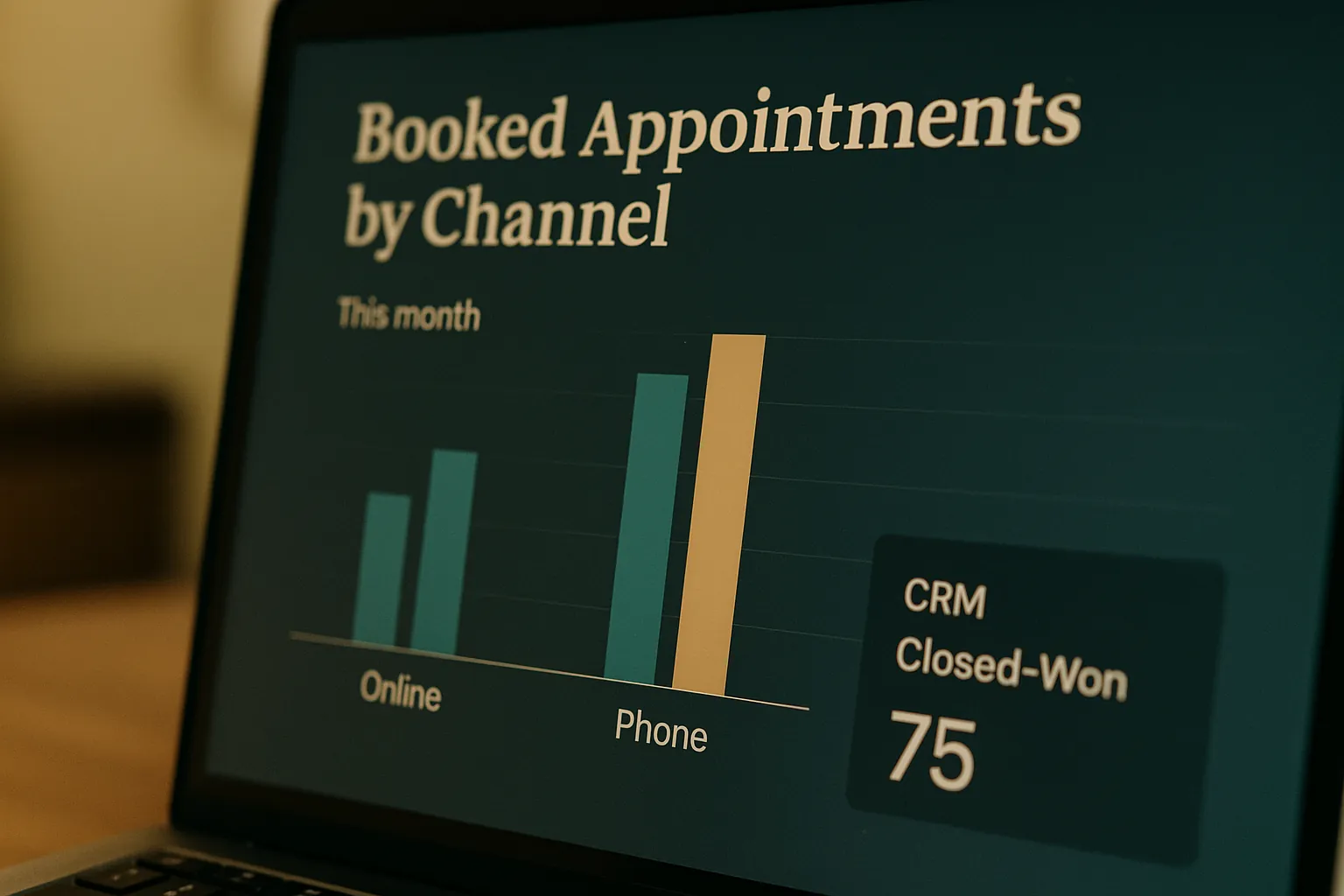
Traffic is not the final metric. For a clinic, success usually means one of several things: more appointment requests, more phone calls from qualified patients, better visibility for priority services, lower dependence on paid ads, or stronger demand at a new location. Good measurement should reflect that reality.
A practical reporting setup often includes organic calls, form submissions, clicks for directions, local profile engagement, rankings for core service and location SEO Services Magister Digital AI terms, and landing page performance for pages tied to revenue. Some clinics can go further and connect lead quality, show rates, or procedure volume to organic channels, though that requires cleaner operations data.
One caution from experience: not every conversion increase is a quality increase. If a cosmetic practice starts attracting price shoppers looking for deals, front-desk volume may rise while close rates fall. If a gastroenterology site ranks nationally for informational topics, traffic may soar while local consultations barely change. Numbers need interpretation. The right SEO partner does not hide behind vanity metrics.
Common mistakes that quietly damage patient acquisition
Some mistakes are obvious, like having no location pages or an outdated phone number. Others are more subtle and happen even in well-funded practices.
A frequent issue is over-relying on the home page. Clinics try to make one page rank for every service, every specialty, and every city. Search engines struggle to understand that page, and patients struggle to find specifics. Dedicated pages usually perform better.
Another issue is publishing medically broad content with no local or service connection. This is common when agencies chase volume. An endocrinology clinic does not benefit much from a generic article that draws national traffic but no local appointments. Content has to meet both user intent and business relevance.
A third issue is weak provider visibility. In many specialties, the physician is part of the decision. Credentials, affiliations, certifications, treatment philosophy, and areas of focus matter. When doctor bios are thin or hard to find, trust drops.
Finally, many clinics underestimate the damage of inconsistent operational data online. Hours, suite numbers, phone lines, online booking links, and holiday changes all affect patient experience. If your search listing says open, but the office line routes nowhere, the opportunity is gone.
What to expect from competent SEO Services for medical practices
Not every clinic needs an aggressive campaign. A single-location practice in a lightly competitive suburb has different needs from a regional specialty group competing across several cities. Still, good healthcare SEO work usually includes a disciplined mix of research, technical work, local optimization, content planning, and conversion improvements.
When evaluating SEO Services, look for these signals of competence:
- They ask about specialty economics, referral patterns, and patient acquisition goals before talking about rankings.
- They audit local presence, technical health, and conversion friction, not just keywords.
- They understand compliance boundaries and avoid reckless health claims or manipulative review tactics.
- They produce a clear plan tied to priority services and locations rather than a generic content quota.
- They explain results in business terms, including lead quality and patient intent, not only traffic graphs.
It is also worth asking how they collaborate with your practice. The best outcomes usually come when SEO strategy is informed by real clinic knowledge. Front-desk staff know the questions patients ask most often. Physicians know which procedures are most valuable and which misconceptions need correcting. Practice managers know where scheduling bottlenecks occur. That operational insight turns a generic campaign into a useful one.
The patient experience starts before the appointment
A final point often gets overlooked. SEO is not separate from patient experience. It is one of the earliest parts of it. The search result, review snippet, map listing, doctor bio, and service page all shape expectations before the patient ever speaks to your team.
When those elements are accurate, clear, and trustworthy, acquisition improves because friction falls. Patients do not have to guess whether you treat their issue, whether you accept their insurance, whether your office is nearby, or whether your physicians have the right expertise. They arrive with more confidence and better context.
That is why the best SEO Services for doctors and clinics do more than chase rankings. They help translate clinical credibility into digital clarity. For practices that want steadier patient growth, lower dependence on referrals alone, and a stronger presence in their market, that clarity is often the difference between being searchable and being chosen.
Magister Digital AI
1135 Garnet Ave #13, San Diego, CA 92109
+16193300953
FAQ About SEO Services
What do SEO services include?
SEO services can include technical site reviews, keyword and search-intent research, content improvement, internal linking, local optimization, structured data, and performance reporting. The exact scope should reflect the business, market, and goals.
How long does SEO take to show results?
Timing varies with the website's current condition, competition, and scope. Technical improvements may show movement sooner, while competitive content and authority work often require several months of consistent effort.
Do SEO services include local SEO?
They can. Local SEO commonly covers Google Business Profile optimization, accurate business citations, local schema, reviews, and service-area or location content when those elements are relevant.
How should SEO performance be measured?
Useful measures include qualified organic traffic, calls, form submissions, booked appointments, revenue influence, and visibility for searches that matter to the business. Rankings alone do not show the full outcome.